Growing vegetables under cover can extend your season, protect tender plants, and make small-space gardening more productive. The right greenhouse depends on your available footprint, climate, crops, and how much daily maintenance you want to handle.
We selected 10 options ranging from portable mini greenhouses to walk-in tunnel models, focusing on useful features such as ventilation, shelving, cover durability, access, and portability.
Best 10 Greenhouses for Vegetables Picks for 2026
Best Vertical-Space Greenhouse

- 12 metal-mesh shelves for organized vertical growing
- Two screened windows plus a roll-up door
- Reinforced PE cover helps retain heat and humidity
Best For: Small patios and backyards growing seedlings, herbs, and compact vegetables
Best Large-Capacity Greenhouse

- Spacious tunnel accommodates rows or multiple shelves
- Galvanized frame includes stakes and tie-downs
- Eight mesh windows support ventilation
Best For: Large home gardens, farms, and small commercial growing areas
Best Lean-To Greenhouse
Compact Tomato Growing Shelter

- Narrow footprint works beside walls or fences
- Translucent PE cover retains light, heat, and moisture
- Roof rods, stakes, and ropes support stability
Best For: Tomatoes and other vegetables in compact outdoor spaces
Best Mid-Size Tunnel Greenhouse

- Walk-in space for rows, shelves, and varied plants
- Galvanized frame includes reinforcing hardware
- Six mesh windows provide ventilation
Best For: Home gardeners wanting a practical mid-size vegetable tunnel
Best Vertical Starter
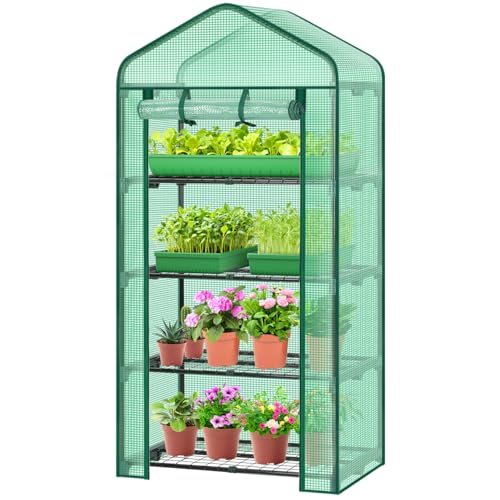
- Four adjustable shelves for compact growing
- UV-resistant PE cover for seasonal protection
- Tool-free, portable metal-frame design
Best For: Balconies, seed starting, and small container gardens
Best for Raised Beds

- 71-inch length covers rows of plants
- Open bottom fits raised beds and soil
- Grid-reinforced PE cover for seasonal use
Best For: Raised beds and compact ground-level vegetable plots
Best Wooden Shelf Greenhouse
Bamworld 3-Tier Portable Greenhouse

- Three shelves for trays, herbs, and small pots
- 75% clear PE cover with roll-up door
- Lightweight eucalyptus frame for sheltered spaces
Best For: Balconies, sunrooms, herbs, and seed starting
Compact Protection

- Four shelves hold up to 22 pounds each
- PE cover helps retain warmth and humidity
- Tool-free assembly with roll-up zipper door
Best For: Balconies, patios, and small outdoor growing spaces
Mobile Growing Station

- Four shelves support up to 24 pounds each
- Locking wheels make repositioning easy
- PVC cover includes a roll-up zippered door
Best For: Movable indoor or outdoor plant growing
Flexible Year-Round Growing

- 95% light-transmitting clear cover
- Four shelves support 17.64 pounds each
- Locking wheels and zippered roll-up door
Best For: Portable seedling and small-vegetable growing indoors or outdoors
Best Vertical-Space Greenhouse – Compact 12-Shelf Walk-In
For gardeners comparing greenhouses for vegetables, the Ohuhu compact walk-in model stands out when organized vertical growing space matters more than floor area. Its reinforced PE cover, screened windows, and 12 metal-mesh shelves create a practical setup for seedlings, herbs, and smaller vegetable plants.
Best For: Patio or backyard gardeners who want a compact, shelf-based greenhouse for seedlings, herbs, and vegetables.
Pros:
- Includes 12 shelves, each rated to support up to 22 pounds.
- Two screened windows and a roll-up zippered door support airflow.
- Reinforced PE cover helps retain heat and humidity while protecting plants from weather.
- Tool-free push-fit assembly includes ropes and upgraded stakes.
Cons:
- The approximately 57-by-57-inch footprint limits space for large vegetable plants.
- Shelf-focused design may be less suitable for tall or sprawling crops.
This is a strong choice for maximizing capacity in a small outdoor area. The shelving is especially useful for starting vegetable seedlings and keeping multiple plants organized, while the compact footprint makes it easier to fit on a patio or in a small backyard.
Best Large-Capacity Greenhouse – 14.6-Foot Walk-In Tunnel
Among greenhouses for vegetables, this VEVOR walk-in tunnel is suited to gardeners who need substantial growing room. The galvanized steel frame, 140g/m² PE cover, and long tunnel layout provide space for rows of plants, shelves, or a larger home garden setup.
Best For: Home gardeners, farms, and small commercial growers who need a spacious walk-in growing area.
Pros:
- Provides approximately 14.6 by 6.4 feet of growing space.
- Galvanized frame includes diagonal bars, reinforced door poles, stakes, and tie-downs.
- Eight mesh windows and a large zipper door promote ventilation.
- Double-stitched PE cover seams help resist tearing.
Cons:
- Its large footprint requires considerable outdoor space.
- At 43 pounds, it is less convenient to relocate than smaller portable models.
The long tunnel format is the main advantage here. It can accommodate multiple vegetable rows or plant shelving while retaining walk-in access, making it a practical option for expanding production beyond a compact backyard greenhouse.
Best Lean-To Greenhouse – Compact Tomato Growing Shelter
This Ohuhu lean-to model is a practical pick among greenhouses for vegetables when you want a narrow shelter for tomatoes and other plants. Its translucent PE cover admits light while helping retain heat and moisture, and the compact design can work beside a wall or fence.
Best For: Gardeners growing tomatoes or other vegetables in a narrow backyard, balcony, or wall-adjacent space.
Pros:
- Compact 6.6-by-2.5-foot footprint suits tight spaces.
- Translucent PE film allows light through while retaining heat and moisture.
- Seven roof rods help reduce snow or water accumulation.
- Roll-up door, two mesh windows, stakes, and windproof ropes support use and ventilation.
Cons:
- The narrow interior is better for focused crops than a broad vegetable collection.
- For improved stability, the manufacturer recommends positioning it against a wall or fence when possible.
Choose this greenhouse when footprint and portability are priorities. Its tall, narrow profile is particularly appropriate for tomatoes and similar plants, while the included anchoring accessories help secure it in an outdoor growing area.
Best Mid-Size Tunnel Greenhouse – 9.6-Foot Walk-In Garden House
For gardeners seeking greenhouses for vegetables with more room than a compact shelter but less bulk than a full-length tunnel, this VEVOR model offers a useful middle ground. Its walk-in layout, galvanized frame, and 140g/m² PE cover provide space for varied plantings and accessible maintenance.
Best For: Home gardeners who want a walk-in tunnel for vegetables, plant shelves, and seasonal growing.
Pros:
- Offers approximately 9.6 by 6.4 feet of usable growing space.
- Galvanized frame includes reinforced door poles, diagonal bars, U-shaped stakes, and tie-downs.
- Six mesh windows and a roll-up zipper door improve airflow.
- Extended PE cover edges can be weighted or buried for improved sealing.
Cons:
- It still requires a substantial outdoor footprint compared with compact greenhouses.
- The included 6.2-foot height may be limiting for especially tall growers.
This model balances capacity and manageability well. It gives vegetable gardeners room to walk inside and arrange shelves or rows without committing to the largest tunnel size, making it a versatile choice for a home garden.
Best Vertical Starter – Ohuhu 4-Tier Mini Greenhouse
If you need a compact option among greenhouses for vegetables, the Ohuhu Mini Greenhouse uses four vertical shelves to hold seedlings, herbs, and smaller vegetable plants. Its PE cover helps create a warmer, more humid microclimate, while the rust-resistant metal frame suits indoor or outdoor seasonal use.
Best For: Balcony gardeners, seed starting, and growers who want movable vertical storage in a small footprint.
Pros:
- Four adjustable tiers maximize vertical growing space.
- UV-resistant PE cover helps shield plants from wind, rain, frost, and intense sun.
- Each shelf supports up to 22 pounds, according to the supplied specifications.
- Tool-free push-fit assembly and a lightweight design make it easy to relocate.
Cons:
- The narrow shelves may not suit large or sprawling vegetable plants.
- At 50–60% light transmission, the cover may provide less direct light than a fully clear enclosure.
- Its compact structure still needs a suitable sheltered or stable location outdoors.
Choose this model when organization and portability matter more than bed-sized growing space. The four-tier layout is particularly useful for starting vegetables early and keeping multiple small containers together.
Best for Raised Beds – Gardzen Long Mini Greenhouse
The Gardzen is a practical choice among greenhouses for vegetables when you want to cover a raised bed or a row of plants rather than stack containers. Its 71-inch length provides horizontal growing space, and the open-bottom design lets it sit directly over garden soil or an existing bed.
Best For: Raised beds, seedlings, herbs, and compact backyard vegetable plots needing seasonal protection.
Pros:
- Long 71-by-36-inch footprint covers multiple plants across a bed.
- Open bottom works directly over raised beds and garden soil.
- 140 GSM grid-reinforced PE cover is designed for improved tear resistance.
- Roll-up front door with a two-way zipper allows access for watering, pruning, and ventilation.
Cons:
- The 42-inch height limits use with tall vegetable plants.
- It has no built-in floor, so the ground or bed underneath must be prepared separately.
- As a seasonal mini greenhouse, it may require additional securing in exposed locations.
This is the strongest match for gardeners who already have a raised bed or ground-level planting area. Its elongated shape makes it more useful for rows of vegetables than for individual pots or vertical shelving.
Best Wooden Shelf Greenhouse – Bamworld 3-Tier Portable Greenhouse
The Bamworld 3-Tier Wooden Greenhouse offers a compact, shelf-style setup for gardeners comparing greenhouses for vegetables in sheltered spaces. Its three shelves accommodate seed trays, nursery pots, herbs, and small plants, while the clear PE cover helps extend the season and protect tender growth from light frost.
Best For: Balconies, sunrooms, covered patios, and gardeners who prefer a lightweight wooden plant display with growing space.
Pros:
- Three shelves provide 15.8 inches of clearance each for trays and small pots.
- Clear PE cover transmits about 75% of sunlight and includes a roll-up zipper door.
- Lightweight eucalyptus frame is easy to move and will not rust.
- Tool-free push-fit assembly takes about 15 minutes, according to the supplied notes.
Cons:
- It is intended for sheltered areas and is not designed for heavy rain or sustained gusts.
- Anchoring hardware is not included for exposed locations.
- The 23-by-17-inch footprint and shelf format are better suited to small plants than mature vegetables.
Pick this model for seed starting, herbs, and tender plants when appearance and portability are priorities. For exposed outdoor use or larger vegetables, the metal-framed Gardzen or Ohuhu options offer a more suitable format.
Compact Protection – 4-Tier PE Mini Greenhouse
For gardeners comparing greenhouses for vegetables, this compact four-tier model offers a practical way to organize seedlings, potted plants, and smaller vegetable starts on a balcony, patio, deck, or backyard. Its PE cover helps retain humidity and warmth while allowing light through.
Best For: Small outdoor spaces and gardeners who want four shelves for seedlings, herbs, and compact vegetables.
Pros:
- Four shelves support up to 22 pounds each.
- PE cover helps protect plants from frost and poor weather.
- Roll-up zipper door provides access and ventilation.
- Detachable, labeled parts are designed for tool-free assembly.
Cons:
- The 27-by-19.6-inch footprint limits the size of plants and containers.
- It is intended for outdoor use rather than indoor placement.
With its narrow footprint and vertical shelving, this greenhouse makes efficient use of limited space. It is a sensible choice for raising multiple small plants, though larger vegetables will outgrow the shelves.
Mobile Growing Station – Pure Garden 4-Tier Greenhouse
Among greenhouses for vegetables, this Pure Garden model stands out for its mobility and flexible placement. Four steel-framed shelves provide room for trays, pots, herbs, and smaller vegetable plants, while locking wheels make it easier to reposition or secure the unit.
Best For: Indoor or outdoor gardeners who need a movable greenhouse for seedlings, herbs, and small plants.
Pros:
- Four 27-inch-wide shelves hold up to 24 pounds each.
- Locking wheels allow movement or stationary use.
- PVC cover with zippered roll-up door helps protect plants from frost and pests.
- Tool-free assembly supports convenient setup.
Cons:
- Its compact shelves are not suited to large vegetable plants.
- The PVC cover may provide less light transmission detail than a fully transparent cover specification.
This is a versatile option when portability matters as much as protection. The higher shelf capacity and locking-wheel design make it especially useful for moving plants between a sunroom, porch, patio, or deck.
Flexible Year-Round Growing – Ohuhu Rolling Mini Greenhouse
For gardeners seeking greenhouses for vegetables that are easy to reposition, the Ohuhu mini greenhouse combines four shelves with smooth-rolling locking wheels. Its clear cover is rated for 95% light transmission, while the enclosed design helps support seedlings and young plants through changing seasons.
Best For: Gardeners who want a portable, light-transmitting greenhouse for seedlings, herbs, and smaller vegetables indoors or outdoors.
Pros:
- Four shelves provide space for plants, with 17.64-pound capacity per shelf.
- Locking wheels support flexible movement and placement.
- Clear PVC cover offers 95% light transmission.
- Roll-up zippered door provides access, ventilation, and pest protection.
Cons:
- The 16-by-12.8-inch shelves are relatively compact.
- The PVC frame is designed for a mini greenhouse and may not suit heavier containers.
Its combination of high light transmission, portability, and seasonal protection makes this a strong fit for starting plants in changing conditions. As with the other compact models, it is best for small plants rather than mature, sprawling vegetables.
How We Picked the Best Greenhouses for Vegetables
We compared these greenhouses by looking at the features that matter most for vegetable growing: usable interior space, frame construction, cover material, ventilation, accessibility, portability, and setup requirements. We also considered the needs of different gardeners, including apartment growers, patio gardeners, seed starters, and households with enough space for full-size tomato, pepper, cucumber, or squash plants.
Because conditions vary widely, no single model is ideal for every garden. Compact racks are convenient for seedlings and herbs, while walk-in tunnels provide better room for larger plants and regular maintenance.
Quick Comparison
| Greenhouse type | Best for | Main advantage | Typical limitation |
|---|---|---|---|
| Mini rack | Balconies, patios, and indoor starts | Small footprint and easy relocation | Limited plant height and capacity |
| Lean-to or tomato greenhouse | Warm-season crops near a wall | Efficient use of existing shelter | Requires a suitable placement area |
| Small walk-in | Container vegetables and seedlings | More accessible growing space | Needs a stable, level surface |
| Tunnel greenhouse | Large vegetable gardens | Room for taller crops and multiple rows | More exposed to wind and weather |
Key Buying Factors for Greenhouses for Vegetables
Size, Height, and Layout
Choose based on mature plant size rather than seedling size. Tomatoes, cucumbers, and peppers need vertical clearance, while lettuce and herbs can work well on shelving. Leave enough space to water, prune, harvest, and move trays without crushing plants.
Ventilation and Temperature Control
Vegetable plants can overheat quickly inside a covered structure. Look for roll-up doors, screen windows, or other vents that allow airflow. In hot climates, place the greenhouse where it receives morning sun and afternoon protection when possible.
Frame and Cover Durability
Galvanized steel frames generally offer more rigidity than lightweight tubing, especially for larger walk-in designs. PE and PVC covers are practical and economical, but they should be secured firmly and checked for tears, loose seams, and wind damage. Anchoring is essential for freestanding models.
Access, Shelving, and Mobility
Wide zippered doors make daily care easier. Integrated shelves are useful for seedlings and compact crops, while locking wheels help move small units between indoor and outdoor locations. Avoid overloading shelves or wheels beyond the structure’s intended capacity.
Season and Climate
These portable greenhouses can offer frost protection and extend shoulder seasons, but they are not automatically heated or winter-proof. In cold areas, add insulation or supplemental heat only with equipment designed for safe greenhouse use. In windy regions, prioritize anchoring and a sheltered location.
Who Should Buy Which Greenhouses for Vegetables?
Choose a Mini Rack If Space Is Limited
Apartment gardeners, balcony growers, and seed starters should consider a four-tier or similarly compact greenhouse. These designs are easiest to relocate and work well for herbs, leafy greens, seedlings, and smaller containers.
Choose a Lean-To or Tomato Model for Focused Growing
If you have a protected wall or want dedicated space for warm-season plants, a lean-to-style greenhouse can be an efficient choice. It suits gardeners who want more height without committing to a large freestanding structure.
Choose a Small Walk-In for Everyday Access
Gardeners growing several containers or needing frequent access may prefer a compact walk-in design. The added headroom makes watering, pruning, and harvesting more comfortable than working around narrow shelving.
Choose a Tunnel Greenhouse for Maximum Capacity
For larger yards and substantial vegetable harvests, a walk-in tunnel provides the most growing volume among these options. Select one only after confirming that your site is level, sheltered, and large enough for secure anchoring.