The best adjustable raised garden beds make it easier to fit vegetables, herbs, and flowers into the space you have—whether that means a compact patio, a long side yard, or a changing backyard layout.
These 10 options cover modular galvanized steel designs, wheeled planters, trellises, self-watering features, and taller beds for more comfortable access. Compare the layouts, materials, and extras below to find the right match for your growing plans.
Best 10 Adjustable Raised Garden Beds Picks for 2026
Heavy-Duty Value
Land Guard 4-by-2-Foot Oval Bed
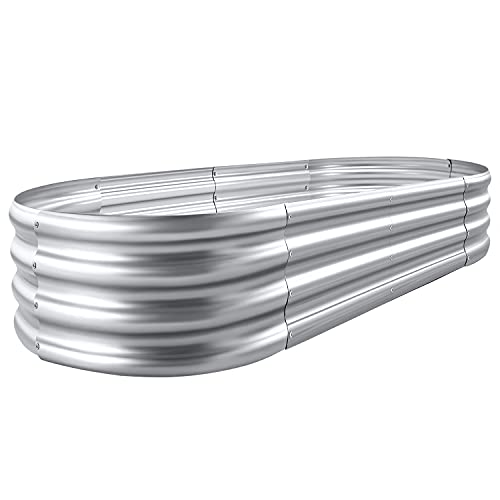
- Double-layer galvanized Q195 metal construction
- Open base supports drainage and root growth
- 4-by-2-foot footprint with 7.14 cubic feet capacity
Best For: Compact outdoor vegetable gardens needing a reusable metal bed
Flexible Steel Pick – 3-in-1 Modular Garden Bed
If you want adjustable raised garden beds for a smaller backyard or changing planting plans, this 3-in-1 galvanized steel kit offers several layout options. Its open-bottom design supports drainage and root ventilation, while the included bracing rods help the bed stay stable after filling.
Best For: Gardeners who want a durable, modular bed for vegetables, herbs, flowers, or fruits in multiple layouts.
Pros:
- Modular panels can be arranged in multiple configurations, including 4x2x1, 3x3x1, and 5x1x1 feet.
- Galvanized steel with a non-toxic anti-rust coating is designed to resist moisture, corrosion, and soil erosion.
- Open bottom promotes drainage and ventilation, and the kit includes bracing rods, gloves, tools, and edge covers.
Cons:
- Assembly requires connecting multiple panels and wing screws.
- The one-foot height may not eliminate bending as much as a taller raised planter.
This is a practical choice when layout flexibility matters as much as material durability. The included hardware and instructions make it a well-equipped option for setting up an outdoor growing space.
Mobility Pick – Wheeled Raised Garden Bed with Shelf
For gardeners seeking adjustable raised garden beds that are easier to move, this resin planter adds lockable casters and a raised working height. Four planting zones, a lower storage shelf, drainage holes, and a water-level monitor make it suited to organized container gardening.
Best For: Patio, balcony, courtyard, sunroom, and backyard gardeners who want mobile planting space with storage.
Pros:
- Lockable wheels allow the planter to follow sunlight or move indoors during harsh weather.
- Four planting zones and a 21-gallon capacity help organize vegetables, herbs, flowers, and fruits.
- Raised height reduces bending, while the lower shelf stores pots and gardening tools.
- Thickened resin is described as crack-resistant and fade-resistant, with reinforced support rods.
Cons:
- Its 43.3-inch width and 17.7-inch depth require a dedicated footprint.
- As a raised container, it does not provide the same direct-ground root access as an open-bottom bed.
This model prioritizes convenience over traditional in-ground expansion. Its casters, shelf, and divided planting areas are especially useful where space is limited or plants need frequent repositioning.
Large Layout Pick – 4-in-1 Modular Steel Bed
This 4-in-1 kit is one of the more flexible adjustable raised garden beds for gardeners who want to change the shape of a larger planting area. The galvanized steel panels can form four layouts, and the open bottom helps with drainage, ventilation, and direct contact with the soil below.
Best For: Outdoor gardeners planning larger or changing beds for vegetables, fruits, herbs, and flowers.
Pros:
- Four configurations include 5x3x1, 4x4x1, 6x2x1, and 7x1x1 feet.
- Galvanized steel and a non-toxic anti-rust coating are designed for outdoor durability.
- Open-bottom construction supports drainage, ventilation, and root growth.
- Bracing rods, gloves, tools, wing screws, and edge covers are included.
Cons:
- The larger panel count means more assembly work than a fixed-size planter.
- The one-foot height still requires some bending during planting and maintenance.
Choose this version if you want more layout choices and greater planting capacity than a compact modular bed. Its support hardware is a useful addition for maintaining shape after the bed is filled.
Budget Flexibility Pick – Adjustable Polypropylene Panels
These adjustable raised garden beds use eight polypropylene panels that can be assembled as one larger box or two smaller beds. The open-bottom design supports drainage, while the collapsible construction makes the kit convenient to disassemble and move between a yard, patio, or greenhouse.
Best For: Beginners and gardeners who want a lightweight, reconfigurable bed for herbs, seeds, vegetables, flowers, or succulents.
Pros:
- Panels can form one garden box, two beds, or a customized shape.
- All-weather polypropylene is designed to resist sun, rain, and snow without discoloring.
- Open bottom supports drainage, and eight stakes help secure the panels in the ground.
- Can be disassembled quickly for storage or relocation.
Cons:
- The panels are only 5.5 inches high, so they provide limited root depth and lift.
- The kit does not include a raised stand or built-in storage features.
- Stakes are intended for securing the bed in the ground, which may limit some placement options.
This kit favors simplicity and configuration flexibility rather than height or heavy-duty construction. It is a straightforward option for creating smaller planting areas and reorganizing them as your garden changes.
Sturdy Oval Pick – Rakukiri 5-Foot Galvanized Raised Bed
If you want adjustable raised garden beds with a durable metal build, the Rakukiri oval planter is a practical option for a larger outdoor growing area. Its 60-by-29-by-11-inch footprint holds about 68 gallons of soil, while the open base helps prevent standing water around plant roots.
Best For: Gardeners growing vegetables, herbs, or flowers in a spacious, weather-resistant bed.
Pros:
- Thick 0.8mm galvanized metal with double-layer anti-corrosion protection.
- Open-bottom design supports drainage and root access to surrounding soil.
- Oval structure offers a distinctive alternative to standard rectangular beds.
- Assembly hardware and instructions are included, with a one-year warranty.
Cons:
- Its 5-foot footprint may be too large for small balconies or compact patios.
- It requires approximately 68 gallons of soil, which adds to setup cost and effort.
The Rakukiri is a solid choice when durability and planting capacity matter more than portability. Its open base is useful for drainage, but plan the location carefully because the large oval frame is intended for a permanent outdoor setup.
Most Flexible Design – Gray 3-in-1 Planter with Trellis
Among adjustable raised garden beds, this gray polypropylene planter stands out for its three configuration options. It can serve as one long bed, three medium planters, or a combination of smaller planters with an integrated trellis, making it useful when your layout or plant mix changes.
Best For: Balcony and patio gardeners who want flexible arrangements for tomatoes, herbs, and flowers.
Pros:
- Converts into one large bed, three medium planters, or a mixed trellis configuration.
- Built-in trellis supports vines weighing up to 15 pounds.
- Lightweight design weighs about 9.92 pounds and is easy to reposition.
- UV-stable, weather-resistant gray finish is designed for outdoor use.
Cons:
- Its stated 19-liter capacity is smaller than that of large metal garden beds.
- The polypropylene construction may feel less substantial than galvanized steel.
This planter is best viewed as a modular container system rather than a single deep garden bed. Its standout advantages are reconfiguration and the integrated trellis, especially for growers working with limited space.
Heavy-Duty Value – Land Guard 4-by-2-Foot Oval Bed
The Land Guard is a straightforward galvanized option for shoppers comparing adjustable raised garden beds with sturdy metal construction. This kit provides a 4-by-2-foot oval bed with a 12-inch height, an open base, and approximately 7.14 cubic feet of growing capacity.
Best For: Outdoor vegetable gardeners seeking a reusable galvanized bed with a manageable footprint.
Pros:
- Q195 galvanized metal uses double-layer anti-corrosion galvanizing.
- Reinforced construction averages 0.78mm thick, with thicker sections up to 1.56mm.
- Open base helps reduce water accumulation and root decay.
- Designed for quick assembly, taking about five minutes according to the supplied notes.
Cons:
- At 12 inches high, it offers less elevation than taller raised-bed designs.
- The 4-by-2-foot size provides less planting area than the larger 5-foot Rakukiri bed.
Land Guard focuses on durable construction and simple setup rather than modular adjustability. It is a sensible fit for gardeners who want a compact, open-bottom metal bed that can be reused for vegetables over multiple seasons.
Best Vertical Pick – Self-Watering Tomato Trellis Bed
If you’re looking for adjustable raised garden beds for a patio, balcony, or compact indoor growing area, this vertical planter offers a space-conscious setup. Its adjustable trellis supports one to four tiers, while the reservoir and lockable wheels add flexibility for watering and placement.
Best For: Gardeners growing tomatoes, herbs, flowers, and climbing vegetables in limited space.
Pros:
- Adjustable trellis can be configured from one to four tiers.
- Bottom reservoir and air holes help manage soil moisture and ventilation.
- Lockable swivel casters make the planter easier to reposition.
- Tool-free assembly and expandable, detachable components support customization.
Cons:
- The 12-by-12-inch footprint limits planting volume compared with wider garden beds.
- The vertical design is especially suited to climbing or compact plants rather than broad crops.
This is the most adaptable option for vertical gardening, particularly when mobility and reduced watering frequency matter more than a large planting area.
Best Value Set – Three-Piece Oval Metal Beds
For gardeners who want multiple adjustable raised garden beds for an outdoor layout, this three-piece galvanized metal set provides three oval planting areas. Each bed is 46 inches long, 23.6 inches wide, and 17 inches tall, with an open base for drainage and root access.
Best For: Outdoor gardeners who want several beds for vegetables, fruits, flowers, herbs, or succulents.
Pros:
- Three-bed set supports a more organized planting layout.
- Open-base construction helps prevent water accumulation and decay.
- Seventeen-inch height provides a raised planting area.
- Thickened oval metal structure is designed for durability and rust resistance.
Cons:
- The set is intended for outdoor use rather than indoor placement.
- Assembly is required, although instructions and accessories are included.
- Its fixed, one-level design offers less configuration flexibility than a tiered planter.
This set is a practical choice when you need several matching outdoor beds and prefer open-base metal construction over a self-watering or vertical format.
Best Simple Setup – Galvanized Steel Garden Bed
This galvanized steel option keeps adjustable raised garden beds straightforward, with a 4-by-2-foot open-base design for outdoor planting. The lightweight frame is designed for easy assembly and movement, while the open bottom allows roots to extend into the soil beneath the bed.
Best For: Beginners seeking a simple, durable outdoor bed for vegetables, fruits, flowers, or herbs.
Pros:
- Open base supports drainage, ventilation, and expanded root growth.
- Lightweight galvanized steel is designed to resist corrosion and rust.
- Middle support strip adds strength to the bed.
- Designed for quick assembly without complex tools or expertise.
Cons:
- Only one bed is included.
- The 12-inch height and one-level layout provide less elevation and flexibility than taller or tiered models.
- It is specified for outdoor use only.
Choose this model if you want a conventional open-base bed with a manageable footprint, lightweight construction, and uncomplicated setup.
How We Picked These Adjustable Raised Garden Beds
We focused on features that affect everyday use: configuration flexibility, usable planting space, bed height, construction, drainage, mobility, and included accessories. Modular models earned attention for their ability to change shape or footprint, while fixed-shape beds were considered for gardeners who prefer straightforward assembly and predictable capacity.
We also looked at whether each design suits its stated purpose. Wheels and storage can help on patios, trellises support climbing crops, and taller metal walls may reduce bending. Because soil, climate, and installation conditions vary, confirm the listed dimensions and included components before ordering.
Quick Comparison
| Best For | Look For | Trade-Off |
|---|---|---|
| Changing layouts | Modular panels and multiple configurations | More assembly and connection points |
| Small patios | Compact footprint, wheels, or vertical support | Less root and soil capacity |
| Climbing plants | Integrated trellis or tomato cage | May limit placement flexibility |
| Accessible gardening | Taller walls or elevated working height | More soil may be required |
| Large vegetable crops | Wide, deep beds with bracing | Harder to move after filling |
Key Buying Factors for Adjustable Raised Garden Beds
Size and Configuration
Measure the available area before choosing a configuration. Check both the smallest and largest layouts, along with clearance for walking, watering, and harvesting. A long narrow shape can work beside a fence, while square layouts are often more efficient in open areas.
Material and Stability
Galvanized steel is popular because it resists rot and is generally lighter than masonry or timber. Look for reinforced corners, connecting hardware, and bracing when a bed is tall, wide, or intended to hold substantial wet soil. A level, stable base is still important.
Height, Drainage, and Soil Volume
Higher walls can make planting easier and may discourage some pests, but they require more growing medium. Confirm that drainage openings are present and avoid placing the bed where excess water could damage a surface. Use a quality soil blend suited to the crops you plan to grow.
Mobility and Accessories
Wheels are useful only when the bed remains light enough to move safely; a fully planted container can become extremely heavy. Trellises, tomato cages, storage shelves, and self-watering features add convenience, but make sure they match your crops and available sunlight.
Who Should Buy Which Adjustable Raised Garden Beds?
Choose a multi-configuration kit if your garden may change or you want to test different layouts. A compact wheeled planter is better for renters, balconies, and patios where mobility matters. Gardeners growing tomatoes, cucumbers, peas, or other climbers should prioritize a sturdy trellis or cage.
For frequent harvesting or reduced bending, consider a taller bed with a stable frame. Large households and serious vegetable growers should favor wider, deeper models with bracing and enough room for crop spacing. If you want the simplest setup, choose a fixed oval or rectangular galvanized bed with clear dimensions and uncomplicated assembly.