Choosing among the best window fans for bedrooms means balancing cooling performance with quiet operation, dependable controls, and a secure fit. The right model can move stale air out, draw cooler outdoor air in, or do both with reversible airflow.
We selected 10 window fans covering compact single-fan designs, twin-fan models, remote-controlled options, thermostats, adjustable expanders, and weather-resistant construction. Use the guide below to match features with your room, window, and sleep preferences.
Best 10 Window Fans for Bedrooms Picks for 2026
Smart Temperature Control
Bionaire Reversible Window Fan

- Programmable thermostat with LED display
- Intake, exhaust, and air-exchange modes
- Fits 24- to 36-inch windows; remote included
Best For: Bedrooms needing automatic temperature control
Flexible Directional Airflow

- Rotatable dual fan heads direct airflow
- Three manual modes for cooling and ventilation
- Adjusts from 21.65 to 33.27 inches
Best For: Sliding windows and manual airflow control
High-Velocity Cooling
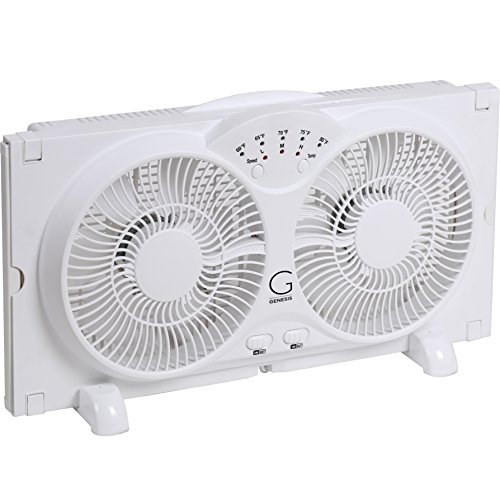
- Two 9-inch fan heads with 706.21 CFM listed airflow
- Reversible intake and exhaust operation
- 60° to 80° thermostat with LED indicators
Best For: Bedrooms needing strong listed airflow
Remote-Controlled Ventilation

- Cool, circulate, and exhaust modes
- Remote control for speed and mode changes
- 23.5- to 37-inch fit with cover and bug screen
Best For: Bedrooms prioritizing remote convenience and fit flexibility
Smart Thermostat Pick
shinic 9-Inch Reversible Window Fan

- Programmable 60°F–85°F thermostat with LED display
- Three airflow modes and three speed settings
- Fits 23.5–37-inch windows; tabletop use is supported
Best For: Bedrooms needing automated temperature control and flexible airflow
Adjustable Twin-Head Value
Comfort Zone Reversible Window Fan
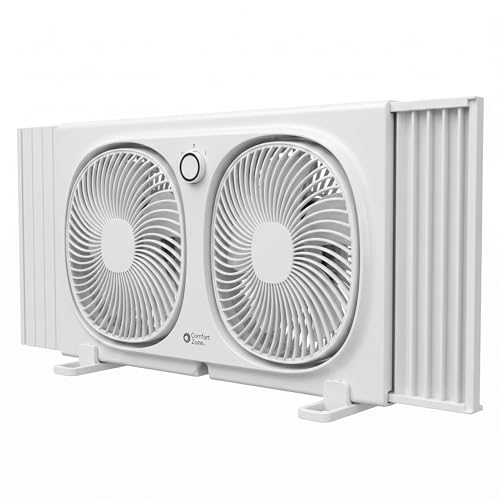
- Two independently controlled 9-inch rotating fan heads
- Manual intake, exhaust, and cross-ventilation options
- Tool-free fit for 21.6–33-inch windows
Best For: Simple directional airflow and cross-ventilation on a budget
Quiet-Control Pick

- Three reversible airflow modes
- Remote control and 45 dB operation
- Includes bug screen, cover, and sealing tape
Best For: Bedrooms and offices needing quiet, flexible ventilation
Portable Value Pick

- Two speeds with manual controls
- Reversible intake and exhaust airflow
- Auto-locking expanders and tabletop feet
Best For: Simple, portable ventilation across multiple rooms
Simple Budget Pick

- Two speeds and manual push-button controls
- Reversible intake and exhaust airflow
- Fits 25- to 32-inch standard windows
Best For: Basic bedroom cooling and ventilation on a budget
Smart Temperature Control – Bionaire Reversible Window Fan
For shoppers comparing window fans for bedrooms, the Bionaire stands out for its reversible airflow, programmable thermostat, and convenient remote control. It fits 24- to 36-inch windows and requires no assembly.
Best For: Bedrooms where automatic temperature control and across-the-room operation are priorities.
Pros:
- Supports intake, exhaust, or simultaneous air exchange.
- Programmable thermostat automatically turns the fan on or off at the selected temperature.
- Three speeds, LED temperature display with dimmer, and included remote control.
- Accordion and additional extender panels fit windows from 24 to 36 inches.
Cons:
- At 120 watts, it uses more power than some lower-wattage alternatives.
- Its 24-inch minimum width may not suit smaller windows.
This is a feature-rich choice for sleepers who want more than basic airflow. The thermostat and remote add convenience, while the broad fit range makes installation straightforward in many bedrooms.
Flexible Directional Airflow – Shinic Rotatable Window Fan
Among window fans for bedrooms, the Shinic offers flexible airflow direction through two manually rotatable fan heads. Its adjustable width, rigid expanders, and free-standing feet support several installation setups.
Best For: Bedrooms with sliding windows or users who want manual control over intake and exhaust direction.
Pros:
- Dual fan heads rotate 180° and 90° for customizable airflow.
- Offers dual cooling, dual exhaust, or simultaneous intake and exhaust.
- Width adjusts from 21.65 to 33.27 inches and supports horizontal or vertical installation.
- Includes handles and removable feet for portability and free-standing use.
Cons:
- Airflow direction and settings are adjusted manually rather than by remote.
- The 21.65-inch minimum width may be too wide for smaller windows.
The Shinic is a practical pick when installation flexibility matters. Its 38 dB listed noise level and 70-watt motor also make it a reasonable bedroom ventilation option, provided manual controls meet your needs.
High-Velocity Cooling – Genesis Twin Window Fan
The Genesis twin fan is a straightforward option for window fans for bedrooms, pairing two 9-inch fan heads with three speeds and reversible airflow. Its built-in thermostat and expandable side panels add useful convenience.
Best For: Bedrooms that need strong listed airflow and simple thermostat-based temperature adjustment.
Pros:
- Two fan heads provide a listed airflow capacity of 706.21 CFM.
- Reversible blades support intake and exhaust operation.
- Built-in thermostat ranges from 60 to 80 degrees with LED indicators.
- Expandable side panels add up to 6.5 inches on each side for window fit.
Cons:
- Operation is controlled through buttons rather than an included remote.
- The 8.4-pound build is heavier than some portable window fan options.
With its dual copper motors, adjustable thermostat, and high listed airflow capacity, the Genesis emphasizes performance over extra controls. It is a solid fit for buyers who prefer a conventional, high-velocity window fan.
Remote-Controlled Ventilation – Comfort Zone Twin Window Fan
The Comfort Zone combines three airflow modes with remote control, making it a convenient choice among window fans for bedrooms. Auto-locking expanders fit windows from 23.5 to 37 inches, and the included fabric cover plus bug screen adds practical versatility.
Best For: Bedrooms where remote operation, broad window compatibility, and multiple ventilation modes are useful.
Pros:
- Cool, circulate, and exhaust modes support different ventilation needs.
- Remote control adjusts speed, mode, and power from a distance.
- Auto-locking expanders fit windows from 23.5 to 37 inches.
- Includes a fabric cover and bug screen for added flexibility.
Cons:
- Its listed 52 dB noise level is higher than some alternatives in this selection.
- The 431 CFM listed airflow capacity is lower than the Genesis model’s listed capacity.
This model is well suited to bedside use because the remote keeps basic adjustments within reach. Its wide expansion range and included cover and screen make it especially adaptable for seasonal bedroom ventilation.
Smart Thermostat Pick – shinic 9-Inch Reversible Window Fan
If you want window fans for bedrooms with more automated temperature control, the shinic 9-inch twin fan combines three speeds, reversible airflow, and a programmable thermostat. Its LED display shows the set and current temperatures, while adjustable panels and included foam sealing tape help create a closer window fit.
Best For: Bedrooms and other rooms where thermostat-based operation, flexible installation, and intake or exhaust airflow are priorities.
Pros:
- Programmable thermostat operates between 60°F and 85°F and includes an LED temperature display.
- Offers intake, exhaust, and air-exchange modes with three speed settings.
- Adjustable side panels fit window openings from 23.5 to 37 inches; it can also be used on a tabletop.
- Includes foam sealing tape to reduce gaps, air leaks, vibration, and noise.
Cons:
- At 80 watts, it uses more power than the 25-watt Vornado model in this roundup.
- Its twin-fan design and adjustable panels may require more setup space than a low-profile single-unit fan.
The shinic is a versatile choice when automatic temperature management matters as much as airflow direction. Check your window dimensions and mounting orientation before buying.
Low-Profile Premium Pick – Vornado TRANSOM Window Fan
The Vornado TRANSOM is a low-profile option for window fans for bedrooms, with four speeds, remote control, and one-button electronic switching between intake and exhaust. Its weather-resistant case and Soft-fit foam block system are designed for single- or double-hung windows measuring 26 to 40 inches wide.
Best For: Bedrooms and whole-room spaces where a slim horizontal installation, remote control, and adjustable ventilation are important.
Pros:
- Provides four speed settings, auto temperature control, and remote operation.
- Electronically switches between fresh-air intake and exhaust without manually repositioning the fan.
- Low-profile body fits 26- to 40-inch-wide single- or double-hung windows using foam blocks.
- Weather-resistant construction, UL listing, and a five-year manufacturer warranty add practical reassurance.
Cons:
- Can only be installed horizontally, and window screen removal may be necessary depending on window depth.
- Requires an opening at least 8 inches tall.
- Its 185 CFM airflow capacity may be less than the listed capacity of the Comfort Zone model.
The TRANSOM stands out for its compact profile and convenient electronic reversing. Confirm the horizontal fit, opening height, and screen clearance before purchasing.
Adjustable Twin-Head Value – Comfort Zone Reversible Window Fan
For straightforward window fans for bedrooms, the Comfort Zone twin-head model offers two independently controlled 9-inch fans, manually reversible airflow, and rotating heads. Built-in expanders adjust from 21.6 to 33 inches, while a removable bug screen and tool-free setup add convenience.
Best For: Bedrooms, offices, and living spaces that need directional airflow, cross-ventilation, and a simple no-tools installation.
Pros:
- Two fan heads rotate 180 degrees, allowing airflow to be directed independently.
- Supports intake, exhaust, or cross-ventilation by positioning the heads in opposite directions.
- Auto-locking expanders fit 21.6- to 33-inch windows without tools.
- Includes a removable bug screen and tabletop feet.
Cons:
- Only two speed settings are available.
- Airflow direction must be reversed manually by pushing the fan heads.
- The listed 53.3 dB noise level is higher than the 45 dB ratings supplied for the other two models.
The Comfort Zone is a practical value choice when rotating heads and simple cross-ventilation are more useful than thermostat automation or electronic reversing. Measure the window opening before ordering.
Quiet-Control Pick – shinic 9-inch Twin Window Fan
For shoppers comparing window fans for bedrooms, the shinic 9-inch Twin Window Fan stands out with its 2026 upgraded noise-reduction design, remote control, and three airflow modes. It can bring outdoor air in, exhaust stale air, or circulate air in both directions.
Best For: Bedrooms, nurseries, and home offices where quieter operation, flexible airflow, and remote control are priorities.
Pros:
- Three modes: intake, exhaust, and circulate.
- Remote and manual controls with three speed settings.
- Includes a washable bug screen, fabric dust cover, and foam sealing tape.
- Expandable panels fit windows from 23.5 to 37 inches, with detachable legs for tabletop use.
Cons:
- Its 45 dB noise rating may still be noticeable to very noise-sensitive sleepers.
- The 23.5-inch minimum width may not suit smaller windows.
This is the most feature-rich option of the three, especially if you want bedroom ventilation without getting up to adjust the fan. The included sealing and protective accessories also make it useful for seasonal operation.
Portable Value Pick – Comfort Zone Twin Window Fan
The Comfort Zone Twin Window Fan is a practical choice among window fans for bedrooms when you want basic reversible airflow and simple controls. Its two speeds let you choose between a gentler breeze and stronger airflow, while auto-locking expanders help secure it in windows from 22-1/4 to 33 inches.
Best For: Shoppers who want a straightforward, portable fan for bedroom, kitchen, office, or tabletop use.
Pros:
- Two speed settings support gentle or brisk airflow.
- Manual intake and exhaust functions help ventilate a room.
- Auto-locking expanders provide a secure fit across a range of window widths.
- Removable cover helps block bugs, debris, and outside air when not in use.
Cons:
- It uses manual button controls rather than a remote.
- It has two speeds instead of the three offered by the shinic model.
- The listed 53 dB noise level may be less appealing for especially quiet bedrooms.
Choose this model for uncomplicated operation and added portability. Its feet and carrying handle make it easier to use away from the window, while the reversible function covers the essential cooling and exhaust tasks.
Simple Budget Pick – Amazon Basics Twin Window Fan
The Amazon Basics Twin Window Fan is a no-frills option for window fans for bedrooms and other small to medium spaces. It provides two speeds, manual controls, reversible airflow, and expandable side panels designed for standard windows from 25 to 32 inches wide.
Best For: Bedroom users seeking a basic, manually controlled window fan for everyday cooling and ventilation.
Pros:
- Two speed settings offer simple airflow adjustment.
- Reversible design supports intake and exhaust use.
- Expandable panels fit standard windows from 25 to 32 inches wide.
- Copper motor is designed for consistent operation.
Cons:
- No remote control or included bug screen is listed in the supplied details.
- Manual push-button operation is less convenient than remote-controlled models.
- The 68-watt motor uses more power than the shinic model’s listed 50 watts.
This model makes sense when you value straightforward operation over extra accessories or advanced controls. Check your window width before buying, since its adjustable range is narrower than the shinic and Comfort Zone options.
How We Picked the Best Window Fans for Bedrooms
We focused on features that matter in actual bedroom use: reversible airflow, speed control, nighttime convenience, window compatibility, stability, and ease of installation. The selection includes single and dual-fan designs, models with thermostats or LED displays, and options with remotes for adjusting settings from bed.
Because noise ratings and window dimensions can vary by manufacturer and operating speed, check the current product specifications before buying. A fan that fits securely and runs comfortably at a lower setting is often more useful than one with the highest advertised airflow.
Quick Comparison
| Feature | Best for | What to look for |
|---|---|---|
| Reversible airflow | Flexible cooling and ventilation | Intake, exhaust, or independent fan controls |
| Twin fans | Moving more air across a window | Adjustable heads and separate or shared controls |
| Remote control | Convenience at night | Clear button layout and reliable range |
| Thermostat | Automatic temperature management | Adjustable temperature settings and readable display |
| Expandable panels | Variable window widths | Secure, rigid expanders that seal gaps |
| Weather-resistant housing | Windows exposed to outdoor conditions | Construction designed for occasional moisture exposure |
Key Buying Factors for Window Fans for Bedrooms
Window Fit and Installation
Measure the usable opening, not just the overall window frame. Confirm the fan’s minimum and maximum width, depth, and mounting orientation. Accordion or auto-locking expanders can help close side gaps, but they should not replace a stable installation. If the fan feels loose, use appropriate window locks or additional support.
Airflow Modes and Speed Control
Reversible airflow is valuable when you want to exhaust warm, stale air before drawing in cooler air. Twin-fan models may provide intake and exhaust simultaneously, while some use a shared reversible setting. Look for at least two or three speeds so you can reduce airflow and noise while sleeping.
Noise, Controls, and Nighttime Use
Manufacturers do not always use consistent noise measurements, so reviews and low-speed performance are useful indicators. A remote, LED display, programmable thermostat, or automatic shutoff can improve convenience, but bright displays may be distracting in a dark bedroom. Check whether display lights can be dimmed or turned off.
Safety and Outdoor Exposure
Use the fan only as directed, keep cords away from moisture, and avoid operating an indoor-rated model in rain. A weather-resistant case may offer additional protection, but it does not make a fan waterproof. Keep the unit clear of curtains and other materials that could obstruct airflow.
Who Should Buy Which Window Fans for Bedrooms?
Choose a Compact Single-Fan Model If…
You have a narrower window, want straightforward controls, or prefer a simpler unit for occasional ventilation. These models can be easier to position and may suit bedrooms where moderate airflow is sufficient.
Choose a Twin Window Fan If…
You want stronger circulation across a larger opening or prefer separate fan heads. Twin designs are particularly useful when you want to combine intake and exhaust, but they may require more careful measurement and support.
Choose a Remote or Thermostat Model If…
You adjust settings frequently, dislike getting out of bed, or want the fan to respond to changing temperatures. Prioritize a readable control system and verify that automatic settings behave as expected.
Choose Weather-Resistant Construction If…
The fan sits in a window that may face occasional damp conditions. Even then, follow the manufacturer’s placement and weather guidance, and remove or protect the unit during severe weather.